A closed-circuit television system (CCTV) uses one or more cameras through either wired or wireless transmission to send a broadcast from the camera directly to a monitor or a recording device for surveillance and security reasons.
They are of several types: bullet, dome, vandal-dome, pan-tilt-zoom (PTZ), wireless, and smart IP. Such cameras could be used in commercial, retail, industrial security, traffic, transportation, and residential settings.
In this article, we will cover the basic definition of a CCTV camera, types of cameras and signal processing, and how to pick and use the right camera.
What is a CCTV Camera? Basic Definition and CCTV Meaning
A closed-circuit television meaning, a CCTV camera system(CCTV), is used for monitoring, surveillance, and security for private properties and large commercial buildings.
Let us understand CCTV meaning, the way it was used traditionally, and modern-day camera and CCTV.
1. CCTV Meaning Explained and How it Worked Originally
The analogue cameras are connected directly to a Digital Video Recorder (DVR) with the help of coaxial cables. Meanwhile, digital cameras transmit data across an internet protocol network.
This data is accessible to a limited number of people through closed-circuit private feeds where video signals connect directly to a specific monitor or local cables. Open signals travel across wireless airwaves or unsecured public networks.
2. How a CCTV Camera Works
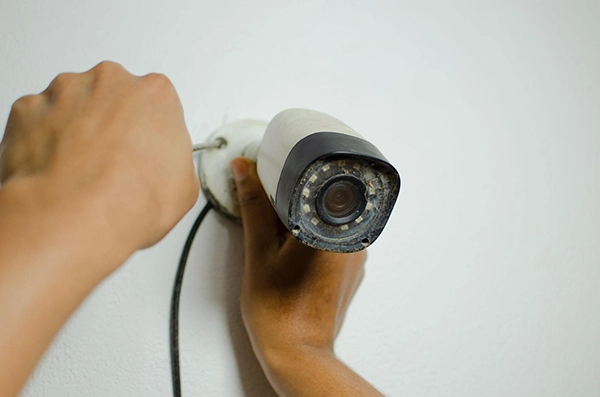
A CCTV camera captures, transmits, and records video by focusing incoming light from the field of view, which gets converted into raw electronic or digital video signals.
The encoded and compressed data is transmitted through Digital Video Recorders (DVRs) and Network Video Recorders (NVRs). The processed video is saved onto Internal Hard Drives (HDDs), solid-state drives (SSDs), or a secure cloud server for review and retrieval.
4 Types of CCTV Cameras
Security cameras come in distinct designs and technologies for specific monitoring needs, from long-range outdoor perimeters to smart indoor spaces. The 4 types of cameras are: bullet, dome and vandal-dome, pan-tilt-zoom, and wireless, smart IP cameras.
1. Bullet CCTV Cameras
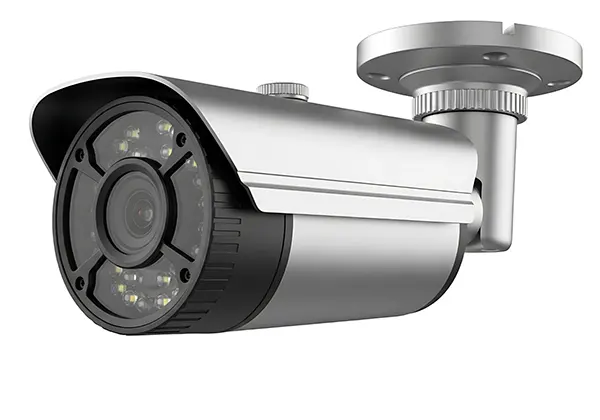
Bullet cameras are cylindrical and long in shape and are primarily used for outdoor perimeters, open yards, driveways, and parking lots because they have long-range focal capabilities. They can also operate in poor weather conditions.
2. Dome and Vandal-Dome Cameras
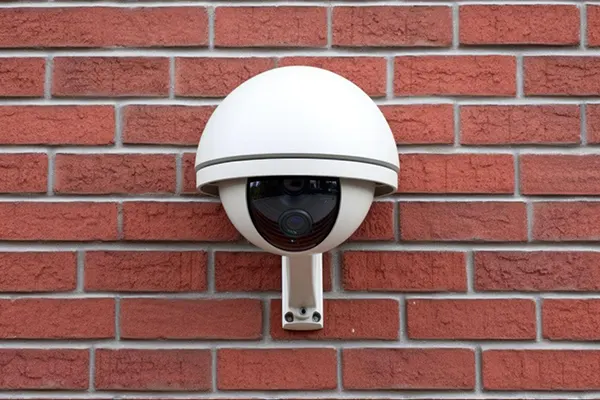
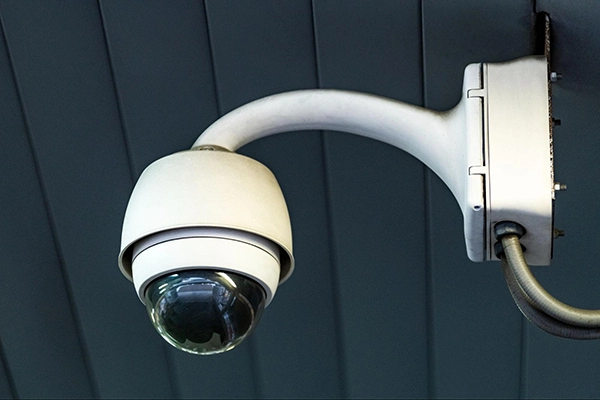
This camera is housed in a ceiling-mounted, rounded glass or plastic shell that obscures the exact direction of the lens. They are designed to withstand physical attacks. Dome cameras are primarily used for indoor ceilings like retail stores, offices, and lower-level outdoor entryways for discreet surveillance.
3. Pan-Tilt-Zoom (PTZ) Cameras
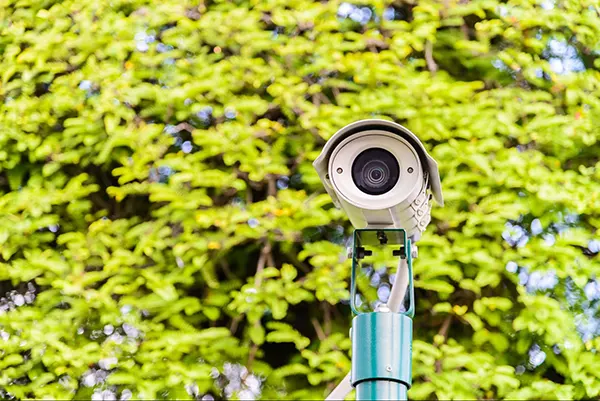
This specific cc camera is capable of panning in different directions and zooming in closely on targets. They are meant to cover large open spaces like warehouses and public surveillance that requires tracking. Pan-Tilt-Zoom cameras are perfect for covering spaces with potential blind spots.
4. Wireless and Smart IP Cameras
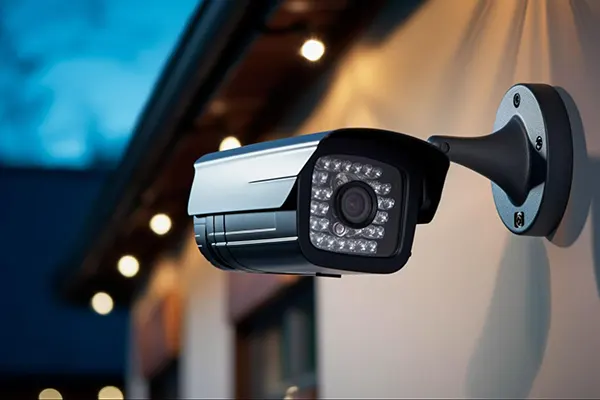
This cc camera is connected to the internet and is accessible from any location. They are network-based digital cameras that transmit data over Wi-Fi or Ethernet, instead of using traditional analog coaxial cables.
Such cameras are fit for residential properties, offices, and temporary setups. The wireless variants are vulnerable to signal interference or jamming without backup measures.
Types of Signal Processing and Storage Capacity
Analogue cameras and coaxial cables are connected to a central Digital Video Recorder (DVR). They are now commonly IP-based, sending video as data over Ethernet to a Network Video Recorder (NVR), delivering high-quality footage, smart analytics, and easy scoring.
1. Analogue CCTV Systems
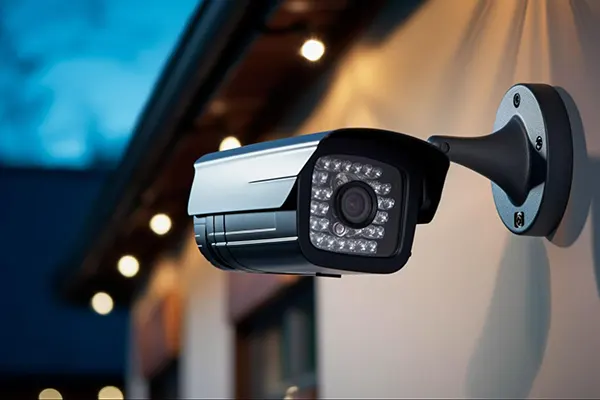
Analogue video signal runs along coaxial cables to a Digital Video Recorder, which digitises the signal, stores the CCTV footage, and handles playback. Modern analogue uses AHD, TVI, or CVI, reaching 1080p and higher.
A DVR can be used to facilitate an inexpensive method of integrating analog and digital cameras into a unified surveillance system. It acts as an encoder and forwards the information captured by the analogue devices to the digital devices’ NVR.
2. Digital & IP-Based Systems
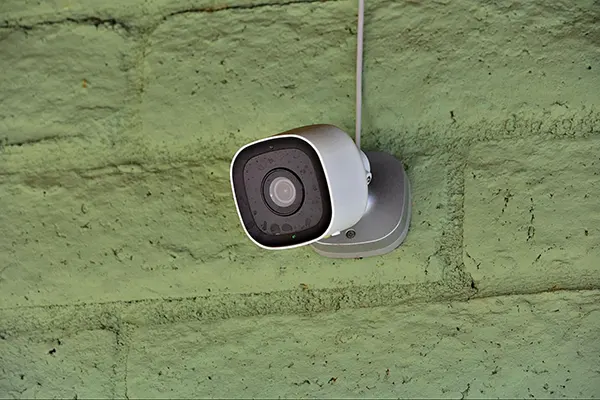
IP cameras convert the captured video into digital format directly at camera level, which is then transmitted over a network, allowing it to be accessed from anywhere and transmitted over a network. Digital IP cameras are equipped with higher resolutions and technologies that exceed the 1080p standard, providing clearer and more detailed images.
3. Compression and Storage Considerations
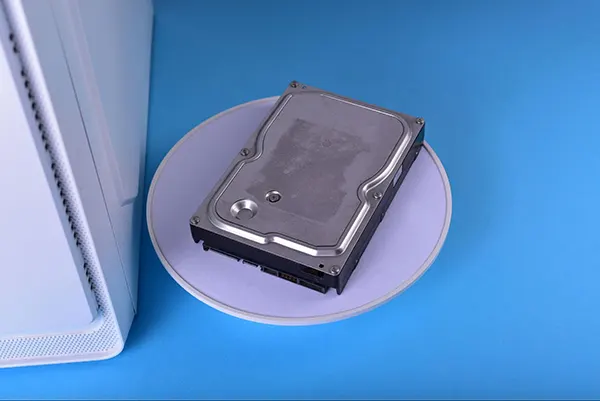
In an IP camera, an onboard processor encodes the signals into a digital video stream (H.264 or H.265 format) before transmission. In an analogue camera, the raw signal travels via coaxial cable to the recorder, where the DVR handles encoding. MPEG-4 provides stream-based compression to reduce network bandwidth and save storage space.
High resolutions (4K) and faster frame rates (FPS) increase the data bitrate, which fills up the storage faster. The footage is saved on Hard Disk Drives (HDDs), Solid State Drives (SSDs), Micro-SD cards, or through cloud storage.
Uses and Advantages of CCTV Cameras
A CCTV camera has a number of uses, such as being less prone to threats, as per the Introduction to CCTV Surveillance Systems and its Applications. It monitors people and things for theft, vandalism, and unauthorized entry. The real-time monitoring allows you to keep an eye on the situation at your home even when you are not around. Moreover, the high resolution of the videos helps with legal documentation and investigation.
1. Deterrence and Crime Prevention

Camera and CCTV systems are used in residential areas to deter crime and assist the police with evidence after a crime has been committed by capturing clearer recordings that can help identify suspects.
It can also reduce the chances of burglary and even vandalism. The likelihood of property crime reduces due to CCTV cameras, as potential offenders might know that they could be recorded.
2. Real-Time Monitoring & Safety
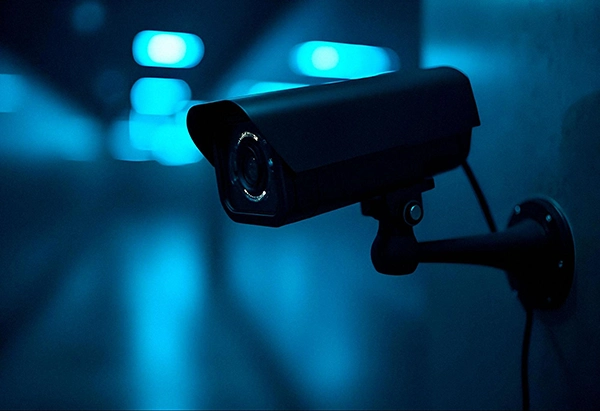
Monitoring stations allow home users to view and manage surveillance footage in real-time, so they can monitor assets from anywhere. This includes motion detection and alert notifications while people are away.
For businesses, CCTV cameras can be used to prevent crimes, shoplifting, vandalism, and monitor staff. It can also be used to monitor compliance with safety regulations, preventing workplace accidents and ensuring employees follow proper protocols.
3. Evidence Collection and Forensics
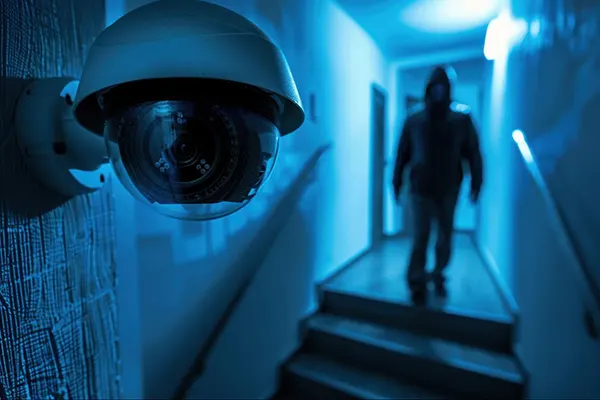
CCTV cameras provide evidence for investigations to help law enforcement solve crimes and prosecute. The footage serves as undeniable evidence in legal cases and validates claims, according to Security.org.
Video documentation protects against false claims and verifies incident details. High-quality cameras can detect facial features, clothing, and other physical characteristics. With adequate coverage, video footage can show how the intruders gained access and what they targeted.
How to Select the Right Cameras and Installation Requirements
It is crucial to review different types of CCTV cameras based on form factors, connectivity, and the environment where security cameras will be placed to determine the right system for your home or commercial space. Other factors include deciding what the right pick for you is, such as indoor and outdoor requirements and resolution.
1. Indoor vs. Outdoor Deployment
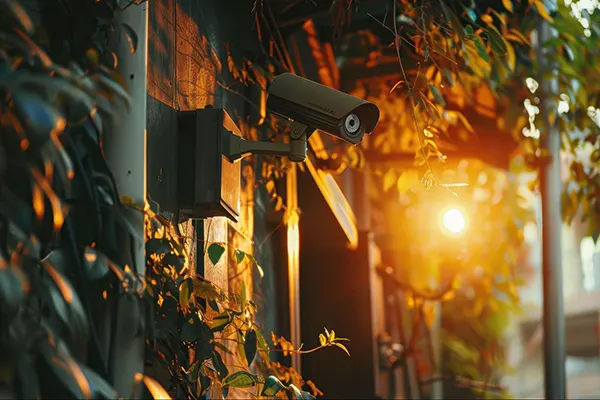
Indoor models omit heavy-duty housings and wide temperature ratings, focusing on aesthetics, size, or affordability. They are compact, lightweight cameras designed for ceiling tiles or discreet placements with lower costs due to simple enclosures.
They typically lack IP ratings or weather resistance. It is essential for them to have infrared night vision for low-light conditions, and they can capture details up to 30 feet or more.
Outdoor cameras are designed to withstand weather exposure, dust, wind, and physical tampering with an IP65 or IP66+ rating. They may have built-in heaters/fans for extreme heat or cold. Camera features should include infrared LED night vision for clear nighttime images, capturing footage in complete darkness with a range of 98 feet.
2. Resolution and Field of View Needs
Video quality of 1080p or 1440p, sometimes labelled as 4MP or 5MP, allows clear identification of faces, details, and movement. Indoor cameras offer a field of view between 90 ° and 120 °, which is optimal for monitoring interiors. They are designed for controlled lighting.
Outdoor cameras need a wider view of the world, featuring viewing angles of 120-180° to cover larger exterior areas. 4K or 8MP resolution is generally reserved for wide outdoor areas where you need to identify a face or a license plate at a distance.3. Wired vs. Wireless Connectivity
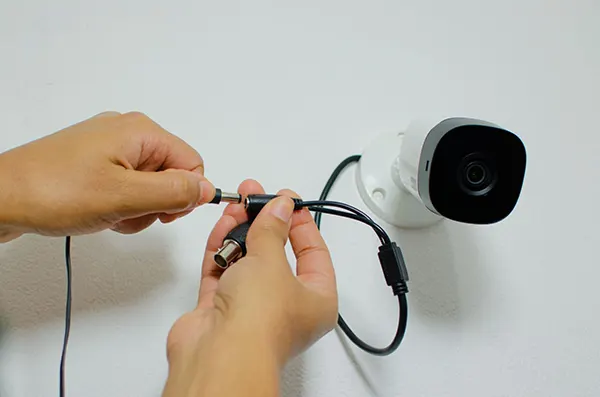
Wired systems are suggested for permanent installations, existing network infrastructure, 4K+ resolution requirements, remote access, and critical asset monitoring. They send data over Ethernet or coax, providing steady video with low latency and no Wi-Fi interference. It provides superior reliability despite higher installation costs, but can be complex to install, often requiring professional assistance.
Wireless systems are suitable for temporary installation, unfavourable cabling situations, and low-traffic areas without electrical power. Wireless cameras’ reliability and latency vary with signal interference and network load. They offer flexibility and quick deployment despite battery management overhead.
| Feature | Minimum Requirement | IdealSpecification |
| Resolution | 720p/1080p (2MP) |
|
| Range | 30-50 Feet | 98+ Feet |
| Field of View | 90-120° | 120-180° |
| Night Vision | Infrared (Black and White) | Color Night Vision (built-in spotlight) |
| Wide Dynamic Range (WDR) | 80 dB to 120 dB | 120dB to 140+dB |
| Video Compression | H.264 | H.265 |
| IP Rating | IP Rating below 65 | IP65 Rating |
| Connectivity | 1080p Resolution with 5 Mbps of upload bandwidth | Power over Ethernet (PoE) with 4K resolution. |
| Motion Detection | Basic Motion Alerts | Smart AI Detection |
| Storage | Wi-Fi Camera using a local Micro-SD card/Basic DVR/NVR. | Network Video Recorder (NVR) using Hard Drives for 24/7 monitoring. |
FAQs
What does CCTV stand for?
A closed-circuit television camera (CCTV) is a device that captures/records video and sends signals to a limited set of monitors rather than broadcasting the footage publicly. It is mainly used for surveillance and security.
What is the main difference between a standard camera and CCTV?
Surveillance cameras store footage on DVR/NVRs with large storage capacities to handle continuous recording and are usually part of a closed-circuit system that connects multiple cameras to a central control station. Security cameras use cloud storage or built-in SD cards, can work independently, and are often part of a smart home system.
Can a CCTV camera record continuously 24/7?
Some CCTV systems are designed to record continuously. However, most modern CCTV and IP camera systems use motion detection to save storage space and only record when a thermal/pixel-change threshold is crossed. Storage ranges between 7 and 14 days for continuous recording and over 30 days for motion-based recording.
Sources: